What's The Difference Between High Bay And Low Bay Lights?
Many lighting mistakes happen before installation starts. A warehouse buyer may order a lamp that is bright enough on paper, but after installation the floor still has dark zones. A workshop may use a high-power fixture in a lower ceiling area, only to create glare for workers. A distributor may receive complaints because the light does not match the building height.
The difference between high bay and low bay lights is not only wattage. It is about ceiling height, beam spread, mounting position, floor activity, glare control, and how the light reaches the working area. For factories, warehouses, logistics centers, sports halls, and commercial buildings, choosing the wrong type can lead to poor visibility, extra electricity use, and expensive replacement work.
Start With Ceiling Height, Not Brightness Alone
High bay lights are usually used in spaces with higher ceilings, such as warehouses, production plants, gymnasiums, logistics centers, and large storage areas. These spaces need light to travel farther from the ceiling to the floor, so the fixture must deliver stronger output and suitable beam control.
Low bay lights are used in lower ceiling areas, where the light does not need to travel as far. If a buyer uses a high bay lamp in a low ceiling space, the area may become too bright or uncomfortable. If a low bay lamp is used in a high ceiling warehouse, the floor may still look dim even when the fixture looks bright at the ceiling level.
This is why project buyers should not choose lamps only by wattage. The first question should be: how high is the mounting point, and what work happens under the light?
Beam Angle Changes The Working Result
A high bay lamp needs to push light downward with enough strength, but it should not create harsh bright spots. Beam angle plays a big role here. A narrow beam can help light reach the floor in taller spaces, while a wider beam may work better for lower ceilings or areas needing broader coverage.
In a warehouse aisle, the lighting target may be vertical rack visibility and safe forklift movement. In a workshop, the focus may be machine operation, assembly work, or inspection tasks. In a sports facility, the concern may be even coverage and reduced visual discomfort.
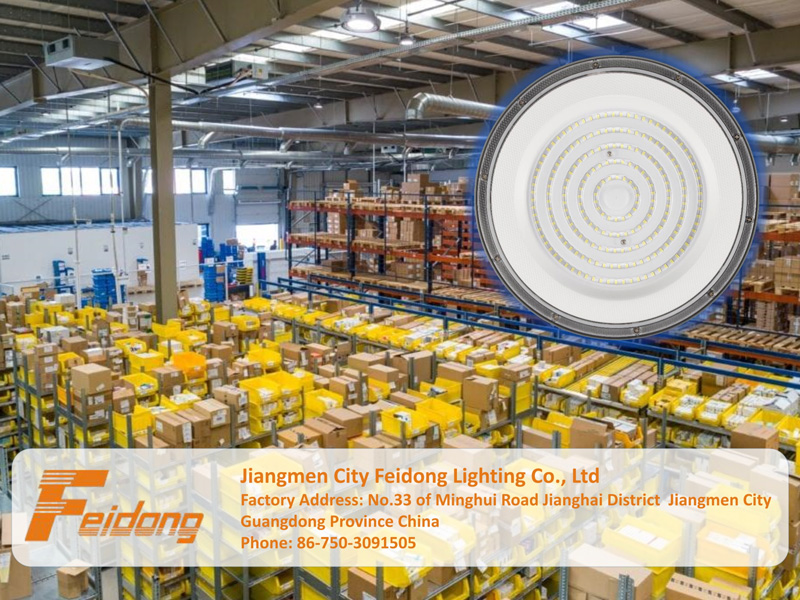
We are FEIDONG, and our led high ceiling lamp is designed for high-ceiling spaces where strong and even illumination is needed. With power options such as 100W, 150W, 200W, and 300W, buyers can match the lamp direction to different building sizes and lighting requirements.
Wrong Selection Can Create Hidden Costs
The wrong lamp choice may not fail immediately. It may turn into daily operating problems.
A logistics center with uneven lighting may see slower picking work or more safety concerns. A factory with glare may receive complaints from workers. A sports hall with poor light distribution may look unprofessional. A warehouse that uses too many fixtures because the beam was poorly planned may spend more on electricity and installation.
For B2B buyers, these hidden costs matter more than the first fixture price. Replacing lamps after installation means extra labor, lift equipment, downtime, and wiring checks. In large spaces, even a small selection mistake can become expensive when repeated across many mounting points.
High Bay Lights Fit Large Open Spaces
High bay lighting is suitable when the ceiling is high and the area needs strong overhead illumination. Common applications include:
Warehouses and storage centers
Manufacturing workshops
Auditoriums and exhibition halls
Sports facilities and training spaces
Large retail or industrial buildings
In these places, the lamp must handle long-distance lighting, stable operation, and enough brightness for daily work. Buyers should review ceiling height, installation distance, beam angle, power option, working hours, and whether the space needs general lighting or task-focused lighting.
FEIDONG has more than 15 years of LED lighting experience and supplies indoor and outdoor LED lighting products for different project needs. For high-ceiling projects, this experience matters because lighting selection should match the real space instead of relying only on a catalogue photo.
Low Bay Lights Fit Lower And More Compact Areas
Low bay lights are better for lower ceilings and smaller indoor areas where strong downward output is not necessary. They are often used in workshops with lower roof structures, retail backrooms, small storage areas, corridors, and service spaces.
The goal is to provide comfortable and even lighting without glare. If the fixture is too powerful or the beam is too concentrated, workers may feel visual discomfort. That is why low bay lighting should be selected with ceiling height and activity type in mind.
A good lighting plan may even use both types in one building. The main warehouse may need high bay lights, while loading rooms, office-adjacent storage areas, and service zones may use lower-output fixtures.
Project Buyers Should Match Lamps To Real Layouts
Before ordering high bay or low bay lights in bulk, buyers should review the building drawing, ceiling height, mounting method, working area, rack layout, equipment location, and expected operating hours. A lighting distributor should also ask whether the customer needs replacement lamps for an existing project or a full lighting plan for a new site.
For new projects, photometric planning can help avoid overbuying or underlighting. For replacement projects, buyers should compare the old fixture position, current brightness complaints, and maintenance issues before selecting a new lamp.
The best choice is not always the highest wattage. It is the lamp that gives the right light level in the right place with less waste and fewer installation problems.
Conclusion
High bay lights and low bay lights serve different building conditions. High bay lights are used for taller spaces that need stronger illumination from above, while low bay lights are better for lower ceilings where comfort and wider coverage matter more.
For warehouses, factories, sports facilities, and large commercial spaces, the right lighting choice can reduce dark zones, glare complaints, energy waste, and replacement work after installation.
If your project team is comparing high bay and low bay lighting for a warehouse, workshop, hall, or industrial site, the next step should be a layout-based review: ceiling height, fixture spacing, power range, beam direction, and actual working area. Once those details are clear, it becomes much easier to choose a lamp that fits the building instead of correcting the lighting after installation.