
How To Fix Solar Street Light Not Working?
When a solar street light stops working, the first reaction is often to blame the lamp itself. But for contractors, distributors, municipal buyers, and outdoor lighting project teams, the real problem is usually not that simple. A solar light system includes the solar panel, battery, LED module, controller, sensor, wiring, installation angle, and working environment. If one part is not checked properly, the whole light may fail at night.
For B2B buyers, this issue matters because every failed light becomes a maintenance visit. In road lighting, garden lighting, parking lots, public walkways, residential communities, and outdoor project areas, repeated troubleshooting can increase labor cost and weaken buyer confidence.
Start With Sunlight Exposure Before Replacing Parts
Many solar lights stop working because the battery is not charging enough during the day. The solar panel may be blocked by trees, walls, dust, nearby buildings, or incorrect installation direction. In some projects, the light works well at the beginning but becomes unstable after the surrounding environment changes.
Before replacing the lamp, the project team should check whether the panel receives enough direct sunlight. A solar light installed in a shaded location may turn on for a short time and then shut off early. Cleaning the solar panel surface and adjusting the installation angle can sometimes solve the problem without changing any hardware.
This is an important step for distributors and contractors because unnecessary replacement increases after-sales cost.
Check The Battery And Controller Together
A common reason for solar street light not working is battery aging or controller failure. The battery stores daytime solar energy for night use. If the battery capacity drops, the light may become dim, work for fewer hours, or fail completely. The controller manages charging and discharging. If it does not work correctly, the battery may not charge or the lamp may not turn on at the correct time.
For outdoor lighting buyers, battery and controller quality should be reviewed before bulk orders. Cheap systems may look fine in a sample test but become unstable after months of outdoor use. In large projects, one weak component can create many service calls.
A good troubleshooting process should check battery voltage, charging status, controller connection, and whether the light enters working mode after sunset.
Installation Errors Can Look Like Product Failure
Some lighting problems come from installation, not from manufacturing. Loose wiring, reversed polarity, poor connector protection, weak mounting, or wrong switch setting may cause the light to stop working. In outdoor projects, rain, dust, vibration, and temperature changes can make weak connections fail faster.
For project contractors, clear installation guidance is important. Workers should confirm wiring, mounting position, waterproof protection, and testing before leaving the site. A light that is not tested after installation may only show problems at night, when maintenance becomes harder.
This is why buyers should not only ask about wattage. They should also ask whether the supplier can provide clear product structure, stable packing, and practical installation support.
Match The Light To The Real Outdoor Scene
Not every solar light is suitable for every location. A small garden path, a wide parking lot, a rural road, and a public square need different brightness levels and working hours. If the selected wattage or battery capacity does not match the application, the light may appear to be faulty even when it is only underspecified.
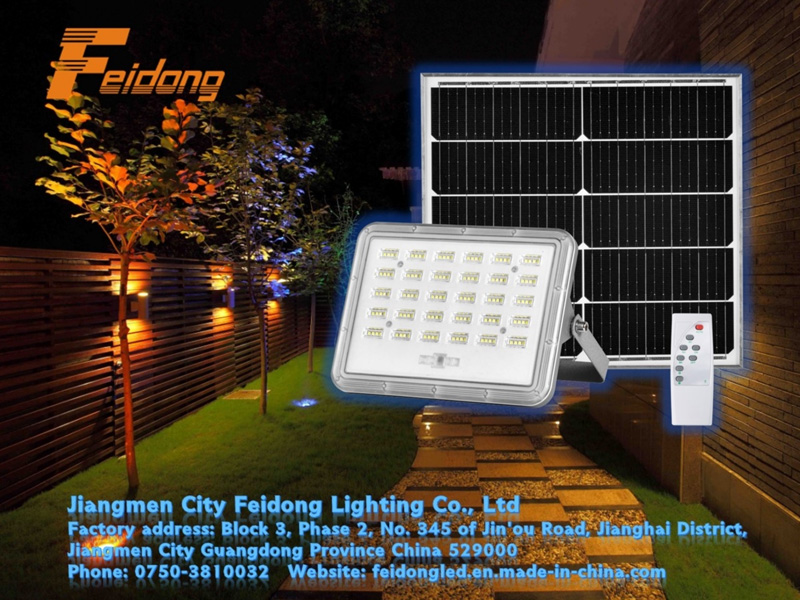
We are FEIDONG, and our led solar garden flood light range includes multiple power options such as 60W, 100W, 200W, and 300W. This gives outdoor lighting buyers more room to match different project needs, from garden areas and courtyards to wider outdoor lighting scenes.
For buyers searching how to fix solar street light not working, the lesson is clear: many problems can be prevented at the selection stage. The light should be chosen according to installation height, coverage area, local sunlight condition, expected working time, and maintenance plan.
Build A Simple Maintenance Checklist
For distributors and project teams, a simple checklist can reduce repeated troubleshooting. Before declaring the light defective, check these points:
Whether the solar panel is clean and receives enough sunlight
Whether the switch or working mode is set correctly
Whether the battery has enough charge
Whether the controller and wiring are connected properly
Whether the LED module is damaged
Whether rainwater or dust has affected the connector area
Whether the selected wattage fits the lighting area
This kind of checklist helps service teams solve common problems faster. It also helps buyers separate real product failure from installation or maintenance issues.
Conclusion
Fixing a solar street light that is not working starts with careful checking: sunlight exposure, battery condition, controller function, wiring, installation angle, and real application needs. For B2B buyers, the goal is not only to repair one light, but to reduce repeated service visits across the whole project.
For outdoor lighting projects, choosing a suitable solar light system from the beginning can reduce many later problems. When planning garden lighting, public pathway lighting, parking lot lighting, or outdoor flood light applications, buyers should review the site condition, required brightness, power option, installation method, and maintenance access before confirming the order.
We are FEIDONG, and our Solar Outdoor Lighting options can support project buyers who need practical products for outdoor illumination with less wiring work and clearer project planning.