

How To Report A Street Light Out?
To report a street light outage, contact the local municipality, highway authority, utility company, property manager, or the service shown on the pole label. Provide the exact location, pole identification number, direction of travel, nearby landmark, and type of fault. Call emergency services when exposed wiring, fire, a fallen pole, or an immediate traffic hazard is present.
Reporting a street light out with complete information helps the maintenance team find the correct fixture and bring suitable access equipment, replacement parts, and traffic-control resources. “A lamp is out near my street” is much less useful than a pole number, map pin, fault description, and photograph taken from a safe location.
First Determine Who Maintains the Street Light
Responsibility varies by location. Lights on public streets may belong to a municipality, transport department, electricity utility, or contracted maintenance provider. Fixtures in residential estates, shopping centres, car parks, factories, campuses, and private roads may be managed by the property owner instead.
Check the pole for an asset label, QR code, telephone number, or website. A local government website may also provide an online street light reporting form. If responsibility is unclear, submit the location to the municipality and ask it to identify the correct operator.
Information to Include in the Report
Prepare the following details before contacting the maintenance provider:
Exact location: Street name, nearest building number, intersection, or GPS map pin.
Pole or asset number: Copy every letter and number shown on the label.
Direction and side of the road: Identify the carriageway, pavement, entrance, or lane affected.
Fault type: Completely dark, flashing, dim, purple, cycling on and off, operating during daylight, physically damaged, or obstructed by vegetation.
Extent of the problem: One fixture, several consecutive lights, or the entire area.
Time observed: State whether the failure is continuous or occurs at particular times.
Safety concern: Mention a dark crossing, exposed cable, damaged cabinet, leaning pole, collision damage, smoke, or sparks.
Contact details: Provide an email or telephone number if status updates are required.
A photograph can help, but take it from a pavement or another safe position. Never stand in a traffic lane, climb the pole, open an electrical compartment, or touch fallen equipment.
Which Street Light Problems Should Be Reported?
A full outage is only one type of fault. Maintenance teams also need reports about flickering, repeated switching, reduced brightness, unexpected color change, excessive glare, loose access doors, damaged lenses, water inside the housing, tilted luminaires, noisy electrical components, and lights that remain on throughout the day.
Multiple consecutive outages may point to a feeder, control cabinet, photocell, timer, communication network, or power-supply problem rather than several independent lamp failures. Reporting the number and pattern of affected fixtures helps technicians plan the diagnosis.
When Is a Street Light Fault an Emergency?
Use the emergency number specified by the local authority when the situation creates immediate danger. Examples include:
A pole has fallen or is leaning over a road or footpath.
Wires or electrical parts are exposed.
The fixture is smoking, burning, sparking, or making loud electrical noises.
A vehicle collision has damaged the pole or control cabinet.
Loose components appear likely to fall.
The failure leaves a critical junction or crossing dangerously dark.
Keep people away from the area and do not attempt temporary repairs. For an ordinary lamp outage without visible danger, use the normal online or telephone maintenance channel.
What Happens After a Street Light Is Reported?
The operator normally creates a service ticket and verifies ownership of the asset. A technician may inspect the driver, LED module, surge-protection device, wiring, connector, photocell, control system, and incoming power. The repair may involve a component replacement, complete luminaire replacement, cable work, or coordination with the electricity network.
Response time depends on safety priority, road classification, technician availability, weather, access requirements, and whether special traffic management is needed. Keep the reference number and use it when following up. If the case is closed but the fault remains, report the same asset number again and include the original ticket.
How Can Better Fixture Specification Reduce Repeat Outages?
Maintenance begins with product selection. Outdoor road lighting must manage rain, dust, heat, electrical surges, corrosion, vibration, optical degradation, and long nightly operating periods. Project buyers should consider IP protection, housing and sealing design, thermal management, driver accessibility, surge protection, mounting compatibility, spare-parts strategy, warranty terms, and batch traceability.
A commercial grade LED Street Light should also be selected according to road geometry and lighting calculations rather than wattage alone. Beam distribution, mounting height, pole spacing, required illuminance, uniformity, glare, ambient temperature, and control method all influence the final system. Our LED street light collection covers multiple power levels and road-lighting formats for streets, highways, pathways, public areas, and industrial projects.
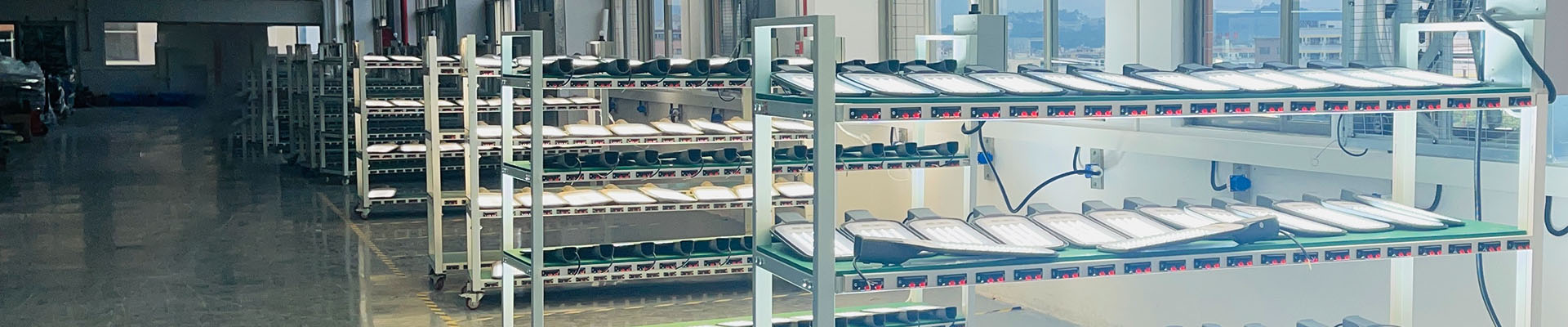
Our manufacturing experience dates from 2009 and includes led street lights, flood lights, high bay lights, and Solar Outdoor Lighting. With production equipment, testing facilities, evolving quality-control procedures, and OEM or ODM support, we can coordinate housing, wattage, optics, driver configuration, mounting, labeling, and export packaging for project requirements. Buyers planning larger road applications can review our LED highway light solution or contact our team through the official inquiry page.
Conclusion
The fastest way to report a street light out is to identify the responsible authority and provide the pole number, precise location, fault type, extent, and safety risk. Use emergency channels for exposed electricity, fire, collision damage, or a fallen pole. For ordinary outages, retain the service reference and follow up through the official maintenance system if the fixture remains defective.
Previous: Do Street Lights Have Cameras?