

How Do Street Lights Work?
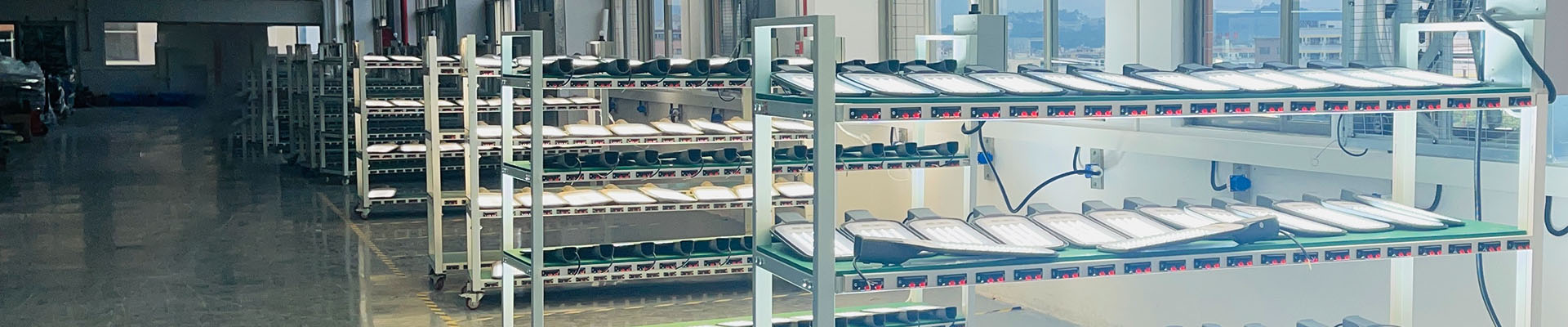
Street lights work by converting electrical power into controlled outdoor illumination, then distributing that light across roads, sidewalks, and public spaces in a way that supports visibility and safety at night. While the concept sounds simple, modern street lighting is a system made up of power delivery, switching or control, a light source, optics to shape the beam, and protection against weather, heat, and electrical surges.
This article explains how street lights operate from the utility line to the light on the ground, why LED Street Lights have become the mainstream choice, and what performance details matter most when selecting fixtures for real projects. You can explore FEIDONG’s LED Street Light options for roadway and area lighting.
The Street Light System in One View
A typical street lighting setup includes:
Power source from the grid, a local distribution cabinet, or a solar/battery system
Control method that determines when and how the light turns on and off
Driver and LED module that convert power and generate light
Optics that shape and aim the light onto the road
Housing and thermal design that protect components and manage heat
Protection devices that reduce damage from surges and harsh environments
Each part affects real-world outcomes such as brightness, uniformity, glare, reliability, and energy cost.
How Street Lights Get Power
Most conventional street lights are powered by AC electricity from the utility grid. Power travels through underground cables or overhead lines to a lighting circuit that serves multiple poles. In many cities, lights are grouped so an entire block or road segment can be controlled and maintained as one system.
The pole typically contains wiring that feeds the luminaire at the top. In engineered installations, grounding is critical because street lights sit in open areas where lightning and electrical surges are more likely. Proper grounding and surge protection help protect drivers and reduce damage to electronic components.
How Street Lights Turn On and Off
Street lights need a reliable way to operate without manual switching. Common control methods include:
Photocell control
A light sensor detects ambient brightness. When daylight drops below a set threshold, the sensor switches the light on. When daylight returns, it switches off. This is one of the most widely used methods because it is simple and reliable.Time-based control
A timer or astronomical clock turns lights on and off based on programmed schedules or sunrise and sunset calculations. This is common in centralized control cabinets.Smart control
Modern systems can use networked controllers that allow dimming schedules, remote monitoring, fault alerts, and energy reporting. This is useful for municipalities aiming to reduce operating costs and improve maintenance efficiency.
Control choice affects not only energy usage but also the consistency of lighting across a district, especially when weather conditions change quickly.
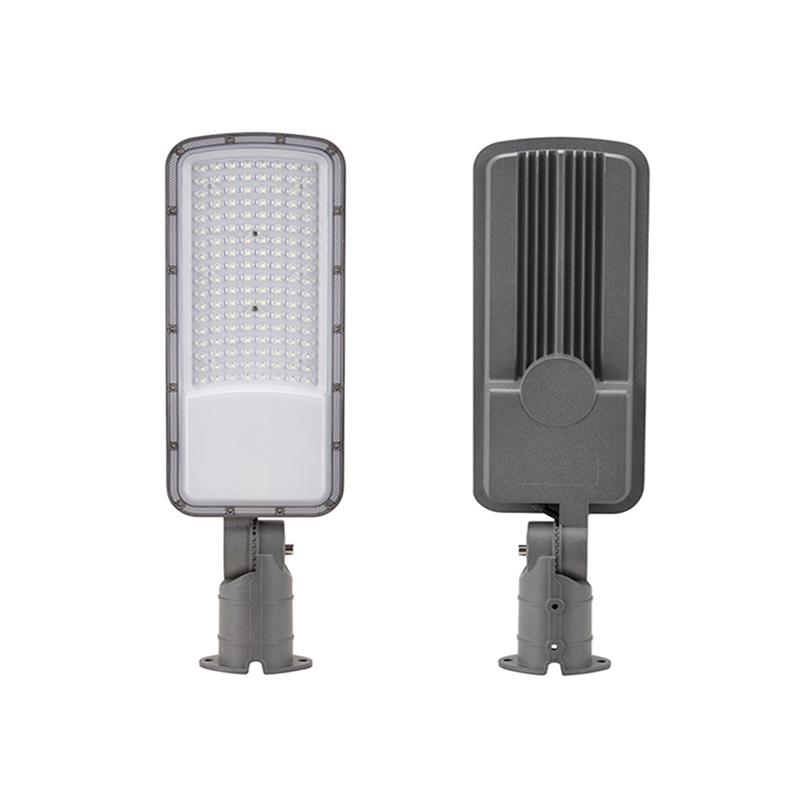
What Happens Inside an led street light
LED street lights work differently from older HID or sodium lamps. The core function is still to produce light, but the electronics and optics are more precise.
LED module: producing light efficiently
An LED module uses semiconductor diodes that emit light when current passes through them. LEDs are directional by nature, meaning they send more light forward rather than in all directions. This makes them well suited for roadway lighting because more of the generated light can be directed where it is needed.
LED driver: converting and regulating power
Street lights must handle voltage fluctuations, temperature changes, and long operating hours. The LED driver converts incoming AC power to a regulated DC output that LEDs require. It also stabilizes current so brightness remains consistent and LED lifespan is protected. In many projects, driver quality is one of the biggest factors behind long-term reliability.
Thermal management: keeping components stable
Heat is the main stress factor for LED components. Even efficient LEDs generate heat that must be removed. A well-designed LED street light uses a heat sink and housing structure to move heat away from the LED board and driver. Lower operating temperatures generally support longer life, stable lumen output, and fewer early failures.
FEIDONG’s LED Street Light solutions are built around these fundamentals: stable power conversion, controlled light distribution, and durable outdoor construction for long-term roadway use.
How Street Light Optics Shape the Beam
Optics determine where light goes. Without good optics, light can create bright hot spots under poles, dark zones between poles, glare into drivers’ eyes, or spill into nearby homes.
Modern LED street lights use lenses or reflectors designed for roadway patterns, such as:
Type II patterns for narrow roads and pathways
Type III patterns for general roadways and perimeter lighting
Type IV/V patterns for wider areas, parking lots, and intersections
Optics selection should match the road width, mounting height, pole spacing, and installation layout. Better optical control can reduce the total watts needed to achieve target illumination and improve uniformity at the same time.
LED Street Lights vs Traditional Street Lights
Many projects upgrade to LED because the technology changes both energy cost and lighting quality.
| Feature | Traditional HID / Sodium | LED Street Light |
|---|---|---|
| Energy efficiency | Lower | Higher for the same lighting outcome |
| Light direction | More scattered | More controllable with optics |
| Color quality | Often limited | Broad options and clearer visibility |
| Warm-up time | Can require warm-up | Instant on |
| Dimming control | Limited | Flexible dimming and smart control ready |
| Maintenance cycle | Frequent lamp replacements | Longer service intervals with quality design |
The biggest real-world difference is controllability. LEDs allow roadway-focused lighting that improves visual comfort while helping reduce wasted light.
Why Some Street Lights Flicker or Fail Early
When street lights do not perform as expected, the cause is usually system-level rather than a single part. Common issues include:
Incorrect driver specification for the local power environment
Poor heat dissipation leading to accelerated component aging
Surge events without adequate protection
Moisture ingress due to sealing or installation issues
Mismatched optics and mounting layout causing poor uniformity or glare complaints
For long-term performance, it is important to select fixtures designed for outdoor exposure and to follow correct installation practices, especially grounding, cable protection, and sealing around entry points.
What to Look for When Choosing LED Street Lights
For procurement and project planning, focus on performance factors that affect outcomes and lifetime cost:
Photometric distribution that matches the road layout
Driver stability and protection features for long operating hours
Thermal design that supports consistent lumen output
Ingress protection suitable for rain, dust, and outdoor cleaning
Surge protection and grounding compatibility
Consistent manufacturing for uniform results across large deployments
If you are selecting fixtures for municipal roads, industrial parks, or residential streets, FEIDONG’s LED Street Light range supports multiple roadway and area lighting needs with project-ready configurations.
Conclusion
Street lights work by delivering power to a lighting fixture, using controls to switch operation based on daylight or schedules, and converting electricity into shaped illumination through a light source, driver, optics, and protected housing. Modern LED street lights improve this process by offering efficient light generation, precise optical control, instant operation, and better compatibility with smart dimming and monitoring systems.
If your goal is reliable roadway lighting with controlled distribution and long service life, explore FEIDONG’s LED Street Light options for practical project applications.
Previous: How Many Lumens Is A Street Light?