

How Much Does A Street Light Cost Per Month?
Understanding the monthly operational cost of a street light has become a common question for municipalities, industrial parks, commercial developers, and private estates seeking to optimize energy spending while maintaining reliable outdoor illumination. Although the exact amount varies depending on wattage, lighting technology, local electricity pricing, and operating hours, examining these variables systematically allows stakeholders to estimate a realistic monthly expense. As LED lighting becomes the globally preferred solution, the cost gap between legacy systems and high-efficiency models continues to widen, making modern luminaires such as FEIDONG’s advanced LED Street Light a significant factor in long-term savings analysis. This article breaks down these variables in practical terms, offering a clear perspective for planners wanting predictable energy budgets.
1. What Determines the Monthly Cost of a Street Light?
The monthly cost of operating a street light is not defined by a single factor but by a combination of electrical characteristics, operational hours, and regional pricing structures. When a light remains in use throughout the night—common for public-road installations—the consumption becomes measurable with high accuracy. The most impactful element is wattage, which directly reflects how much power the fixture draws. A traditional 150 W sodium-vapor luminaire and a 60 W high-performance LED unit deliver very different bills at the end of the cycle, even if both achieve similar illumination levels.
Another determining variable is runtime. Street lights generally operate from dusk to dawn, translating to an average of 10–12 hours daily depending on the geographical latitude and season. Months with longer nights push the total consumption upward, while summer months slightly reduce it. When cities deploy smart controllers capable of dimming or adaptive brightness, the monthly cost can decrease substantially, shifting the total from a fixed estimate to a dynamic consumption curve. This variability underscores the importance of considering modern LED technology, especially solutions like FEIDONG’s LED Street Light, which are engineered for reduced wattage and optimized runtime efficiency.
Most regions calculate electricity pricing based on kilowatt-hour usage, which means municipalities simply multiply the fixture’s consumed kWh by the local rate. However, some areas apply seasonal pricing structures or tiered billing models. In those cases, estimating monthly cost becomes slightly more complex, requiring knowledge of utility rules. Still, once wattage and operational hours are known, calculating the cost becomes a predictable exercise that can be applied to any project.
2. Typical Cost Ranges Based on Lighting Technologies
To better understand monthly costs, it helps to classify street lights by the technology they use. Different light sources convert energy into illumination with different efficiencies. Below is a comparison of common systems to illustrate how technology choice influences monthly cost.
Traditional vs. LED Consumption Table
| Lighting Type | Typical Wattage | Monthly Energy Use (12 hours/day) | Monthly Cost at $0.12/kWh |
|---|---|---|---|
| High-Pressure Sodium (HPS) | 150 W | ~54 kWh | ~$6.50 |
| Metal Halide | 250 W | ~90 kWh | ~$10.80 |
| Induction Lamp | 120 W | ~43 kWh | ~$5.20 |
| LED Street Light | 40–80 W | ~14–29 kWh | ~$1.70–$3.50 |
This table demonstrates the significant difference in energy demand between older technologies and LEDs. Even on the high end of the LED wattage spectrum, the monthly bill remains relatively low. A shift from a 150 W HPS lamp to a 60 W LED model can reduce energy consumption by more than half without compromising brightness or road safety.
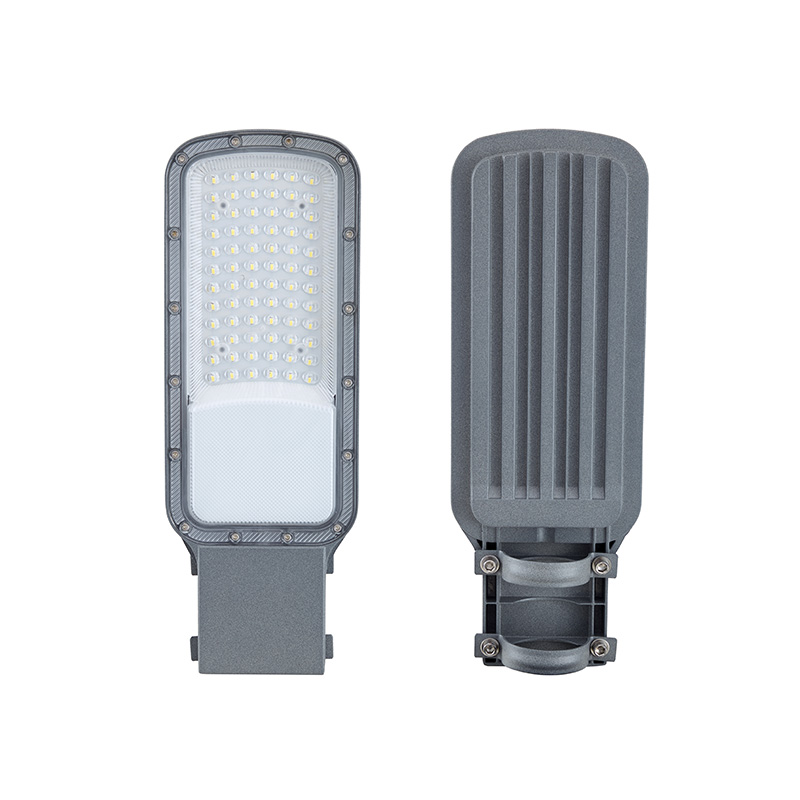
LED lighting also introduces benefits beyond pure wattage reduction. Thermal management, optical precision, and high-lumen-per-watt ratios contribute to lower bills and improved roadway visibility. High-grade luminaires like FEIDONG’s LED Street Light are engineered specifically for long-term cost efficiency, using smart driver configurations and robust optical modules to maximize every watt consumed.
Differences also arise from how much of each energy source converts into usable illumination. Legacy technologies often waste energy through heat dissipation, slow warm-up cycles, and omnidirectional output requiring reflectors. LEDs, by contrast, emit directional light with minimal waste, making them inherently more cost-effective. These efficiency fundamentals explain why municipalities worldwide are replacing outdated systems with LED networks.
3. Calculating the Monthly Cost of One Street Light
Even though cost calculators exist, it is helpful to walk through the formula manually so project planners can estimate expenses without external tools. The formula involves multiplying wattage by operational hours, converting it to kilowatt-hours, and finally applying the local electricity rate.
Formula:
Monthly cost = (Wattage ÷ 1000) × Hours per day × Days per month × Electricity rate
To demonstrate, consider several wattage levels commonly used today.
Example Calculations
60 W led street light
(0.06 kW × 12 hours × 30 days) × $0.12 = $2.59 per month100 W LED Street Light
(0.10 kW × 12 × 30) × $0.12 = $4.32 per month250 W Metal Halide Lamp
(0.25 kW × 12 × 30) × $0.12 = $10.80 per month
These examples show why the shift to LED is overwhelming in modern planning. The difference between a 100 W LED luminaire and a 250 W metal halide lamp can exceed $6 per month per fixture. For a city with 10,000 lights, the monthly savings could surpass $60,000.
Operation times vary by region, but the calculation method remains identical. In northern zones with longer winters, the monthly cost increases by merely extending the “hours per day” value. Similarly, smart dimming systems reduce the number significantly by adjusting output after midnight, leading to lighter consumption profiles.
Cities adopting FEIDONG’s LED Street Light often integrate these dimming systems into their deployment strategy. By combining low-wattage LED engines with adaptive brightness control, consumption becomes even lower than standard estimates, often dropping by 20–40 percent.
4. Factors That Influence Monthly Cost Beyond Wattage
While wattage serves as the foundation for cost estimation, several additional variables shape the final monthly cost. Each of these elements contributes differently, and understanding them allows project planners to create more accurate forecasts for budgeting and infrastructure planning.
One of the most impactful variables is the local electricity rate. Some regions offer lower tariffs for industrial or municipal operations, while others maintain fixed residential-style pricing. Seasonal pricing also plays a role, as winter months may incur slightly higher utility fees in certain countries. When evaluating energy-efficient fixtures such as those offered by FEIDONG, energy planners should model different pricing scenarios to understand the cost implications over the life cycle.
Durability and driver efficiency also play important roles. High-quality LED drivers convert incoming current into stable power for the light engine, and lower conversion losses translate directly into reduced monthly bills. While the difference may appear small on a per-unit basis, scaling the effect across thousands of poles can yield noticeable savings. This is why luminaires like the FEIDONG LED Street Light are engineered with reliable drivers that maintain high conversion efficiency throughout the fixture’s lifespan.
Environmental conditions influence cost as well. LEDs perform optimally when thermal regulation is effective; in extreme heat, lower-quality fixtures may experience thermal droop, drawing slightly more current to maintain brightness. Well-designed heat dissipation systems counteract this issue. FEIDONG integrates optimized housing structures to ensure consistent energy use across seasons, helping maintain predictable monthly costs even in challenging climates.
Additionally, lighting control technologies impact consumption. Smart photocells, timers, motion sensors, and networked management systems can dynamically reduce the hours at full brightness, allowing the operator to reduce unnecessary runtime. A well-managed LED network may run at 100 percent brightness during peak periods and dim to 30–50 percent in low-traffic hours, dramatically changing monthly cost outcomes.
5. Realistic Monthly Cost Estimates for Modern LED Street Lighting
While mathematical formulas help create specific calculations, many project planners prefer ranges that reflect typical real-world conditions. Because LED street lights today operate within a predictable wattage band, it is possible to estimate approximate monthly costs in most regions.
A well-engineered 40–80 W LED luminaire is commonly used for municipal roads, pedestrian pathways, industrial compounds, and parking facilities. Assuming standard night operation, these fixtures frequently fall into the $1.70 to $3.50 monthly cost range in areas with moderate electricity prices. For suburban streets or residential developments that opt for lower wattage, the cost can be even lower.
To illustrate, consider the following practical estimates representing common use cases:
Low-Power Residential LED Pole Light (30–40 W)
Monthly cost typically falls between $1.00 and $2.00, assuming 10–12 hours of nighttime use.Standard Municipal led roadway light (60–80 W)
Monthly cost is often between $2.50 and $4.00, depending on electricity prices and peak-hour dimming settings.High-Mast LED Lighting (120–200 W)
Although not traditional street lights, these fixtures illuminate highways and large intersections and usually cost $5.00 to $9.00 per month.
These numbers highlight how LED technology pushes public lighting into a cost-efficient era. The low ongoing expense allows cities to allocate more resources to urban expansion, smart infrastructure, and maintenance improvements. Many municipalities report that the monthly savings from upgrading to LED systems offset retrofit investments within only a few years.
FEIDONG’s LED Street Light product line contributes to this shift, engineered for high-lumen output at lower wattage levels, extended lifespan, stable driver performance, and integrated options for smart-control compatibility. As the adoption of LED lighting accelerates globally, these characteristics define cost-efficient street lighting strategies.
Summary
The monthly cost of operating a street light depends on wattage, runtime, electricity price, and control systems. Traditional lighting systems consume significantly more energy, translating to higher bills, while LED solutions dominate modern infrastructure due to their low monthly operating cost—often barely a few dollars per unit. Because cities and private developers increasingly emphasize operational efficiency, shifting to LED luminaires has become the standard for long-term cost management.
By calculating consumption using a simple kilowatt-hour formula, planners can forecast expenses for projects ranging from small residential roads to large metropolitan networks. As demonstrated in the comparative table, the difference between outdated lamps and efficient LED units is unmistakable. Modern fixtures such as FEIDONG’s performance-focused LED Street Light offer superior lumen output per watt, ensuring that every kilowatt-hour contributes directly to useful illumination rather than wasted heat.
For projects seeking predictable monthly spending, minimal maintenance, and long lifecycle value, LED street lights represent the most cost-effective option available today. Understanding their monthly energy cost is essential for precise planning, budgeting, and long-term sustainability. With accurate knowledge of each influencing factor, municipalities and businesses can confidently invest in reliable, efficient lighting systems that keep public spaces safe while reducing operational expenditure month after month.